LA VIRGEN DE TONANTZIN
La Virgen de Tonantzin Fashion Installation:
Story, Visual Representation, and Experiential Design
The Story: The Encounter at Tepeyac Hill
At the heart of this fashion installation lies the historic and symbolic encounter between Juan Diego and La Virgen de Guadalupe on Tepeyac Hill. Before this sacred event, the hill was a site devoted to Tonantzin, an Aztec goddess of the earth and fertility. Colonizers sought to erase indigenous spiritual practices by transforming sacred spaces and replacing native deities with Christian figures. In the apparition of La Virgen to Juan Diego, cloaked in stars and roses, Catholicism asserted dominance over indigenous beliefs, framing the encounter as a divine endorsement of colonization.
Yet beneath this imposed narrative remains an enduring truth: the spirit of Tonantzin never disappeared but evolved, surviving in whispered prayers, traditions, and cultural resilience. This installation seeks to reclaim that narrative, highlighting both the loss and the persistence of ancestral identity.


Visual Representation of Loss and Persistence
The installation presents two distinct yet intertwined looks that embody both cultural erasure and survival:
Look 1: Tonantzin — The Guardian of Ancestral Wisdom
-
Color Palette: Warm Earth tones such as deep reds, greens, and golds, symbolizing life, fertility, and harmony with the natural world.
-
Textiles: A mixture of natural fabrics featuring intricate indigenous patterns that represent the craftsmanship and spiritual connection of native traditions.
-
Accessories: A veil, flowers, and feathers as a homage to agricultural abundance and sacred rituals.
-
Silhouette: Contemporary mix of organic and structured textiles


Proposed design


Look 2: La Virgen de Guadalupe : A Cloak of Colonial Influence
-
Color Palette: Bold jewel tones—deep blue, pearl, and silver. Contemporary reminiscence of traditional religious depictions.
-
Textiles: Rich, shimmering fabrics that symbolize European influence and Catholic pageantry.
-
Accessories: A gilded halo, mimicking religious iconography.
-
Silhouette: Structured and imposing, featuring a veil that symbolizes the burden of imposed beliefs.
Key Visual Elements:
-
Embroidery
-
Metallic accents reminiscent of church regalia.
-
Closed-toe shoes, representing a severance from the earth and indigenous roots.


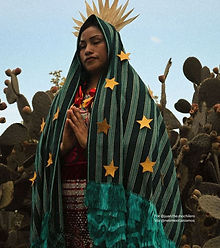

Proposed design


The Meeting Point
At the center of the installation, the two looks are positioned face to face, separated by a symbolic veil or barrier that represents the process of colonization. The barrier is made of sheer fabric, embroidered with fragmented symbols from both indigenous and Catholic traditions.
-
Symbolism of the Veil: The sheer nature of the veil suggests that despite colonial efforts, the essence of indigenous spirituality remains visible and accessible.
-
Movement: The space invites viewers to walk between the two figures, experiencing the tension and transformation firsthand.
Soundscape
-
Indigenous Prayers and Chants: Gentle whispers of pre-colonial indigenous prayers fade into dominant Catholic chants.
-
Environmental Sounds: Natural sounds like rustling leaves, flowing water, and distant drumbeats subtly blend into church bells and choir hymns.
